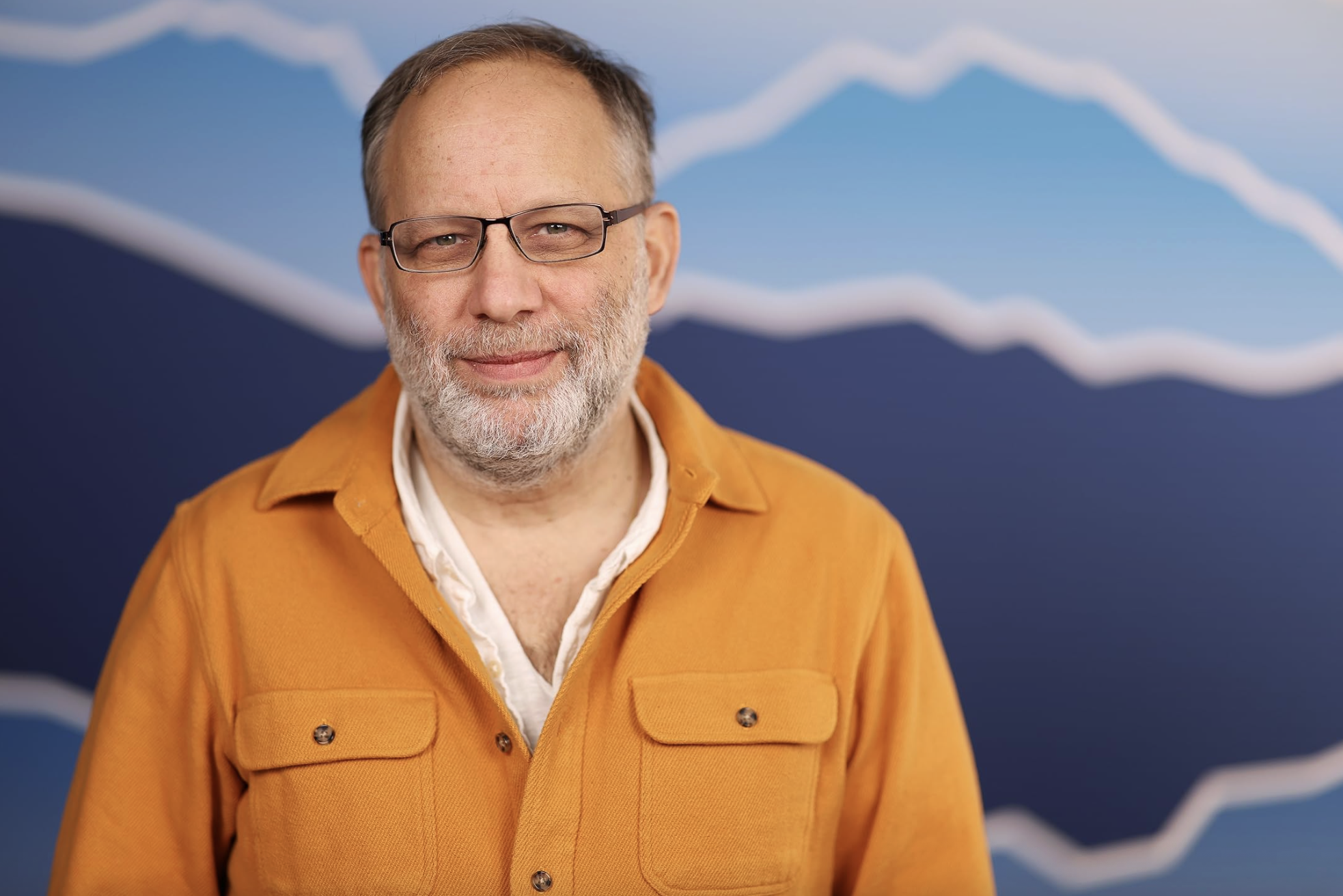
“How are they doing? Do they still exist?” asks Ira Sachs as I mention that I am doing this interview for Side by Side. The American filmmaker has been familiar with Russia's only LGBTQIA+ film festival and its creators since 2010, when his short film The Last Address was featured in the festival program. Three years later, one of Sachs' most personal films, Keep the Lights On, was also shown in Russia. This film was inspired by the director's traumatic relationship with literary agent and writer Bill Clegg, who was battling drug addiction.
In 2014, the festival included a screening of Love Is Strange, a moving drama about an older gay couple from New York searching for a place to live, first in St. Petersburg and then in Moscow. The screening was followed by a discussion about how older LGBTQIA+ people live in Russia. Photos from this event can be viewed here; it's a cherished memory from the “other” Moscow of a decade ago. Although Ira Sachs never managed to visit the festival in person, but he engaged with the audience online after the screenings of his films and always expressed interest in the festival's situation and the broader context in Russia.
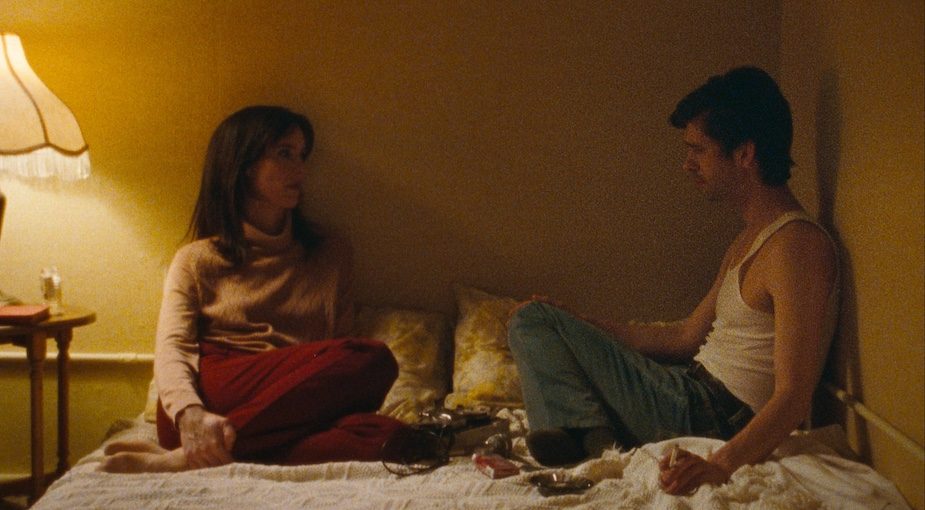
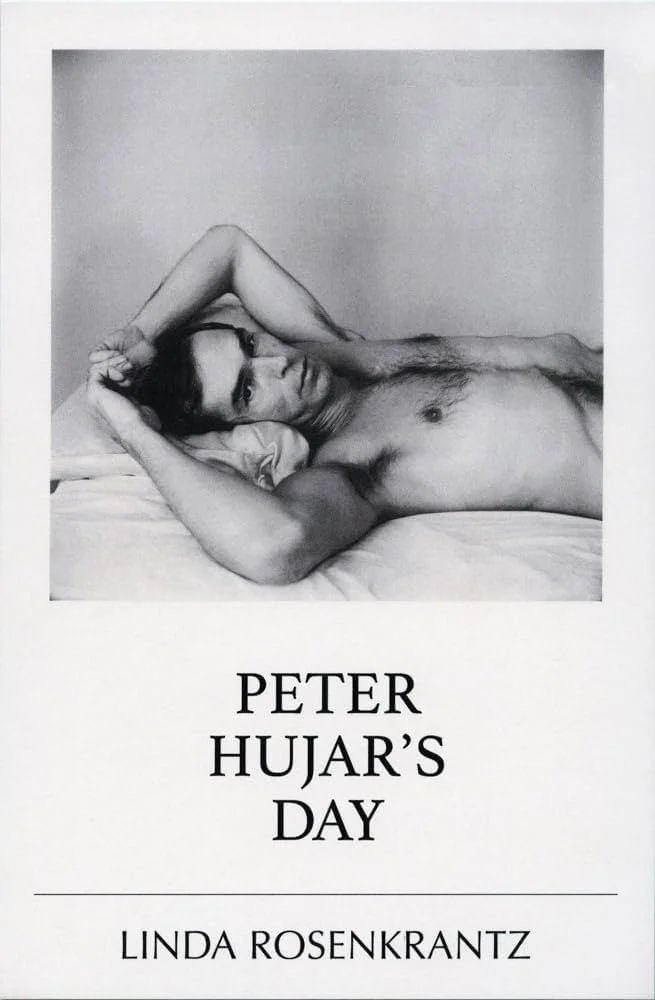
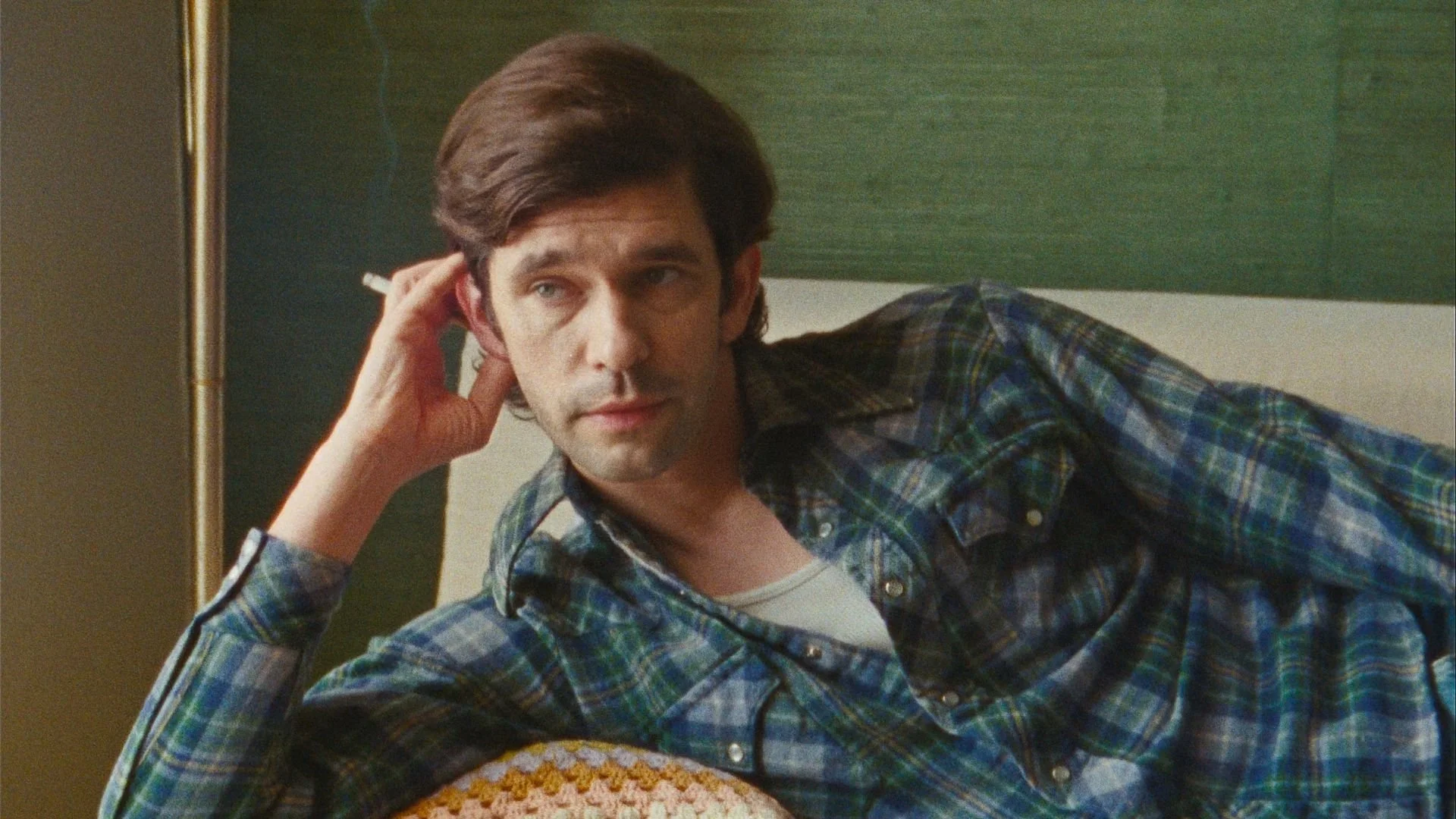
We met with the director the day after the European premiere of Peter Hujar's Day, at the Berlin Film Festival. It documents a real conversation that took place on December 19, 1974, between the famous New York photographer Peter Hujar (Ben Whishaw) and his close friend, writer Linda Rosenkrantz (Rebecca Hall). She invited Hujar to her apartment in the West Village, one of the bohemian areas of New York, and recorded their conversation in great detail, starting from the moment the artist opened his eyes. The writer envisioned a series of interviews in which famous friends would tell how they spent their previous day, thereby allowing the audience to glimpse into their world.
At that time, Hujar was a highly sought-after photographer, working with Harper's Bazaar, The New York Times, and GQ. It was later that he would lose interest in commercial photography and become a vibrant queer artist and activist. However, it was after his death that he gained global recognition. You may have encountered at least one of his works, Orgasmic Man, which appears on the cover of Hanya Yanagihara's novel A Little Life.
As the photographer tells Rosenkranz about his photo shoots, calls and meetings with notable figures such as Allen Ginsberg, Fran Lebowitz, William S. Burroughs, and Susan Sontag, we don't just learn how the photographer lives and works, what he enjoys and worries about. Peter Hujar's Day becomes a reflection on the artist's journey, the ‘inner saboteur,’ and ultimately, time itself.
The Rosenkrantz’ book never saw the light of day as originally intended. For a long time, it was believed that this particular conversation was not preserved either. A transcript of the conversation was accidentally found in 2019, and eventually published separately. That's how Ira Sachs found out about this story. A queer filmmaker living in New York City since his twenties, he had always admired Peter Hujar's work, and of course, the photographer's death from AIDS came as a great shock to him. In 2021, after the book was published, he DM’ed Linda Rosenkrantz to discuss the idea of adapting the conversation into a film. She was quite sceptical at the beginning but she agreed.
Ira Sachs zooms in on ordinary life.
Audiences relate.
Interview with the American filmmaker and author of Passages, Keep the Lights On, and Love Is Strange — on observation, finding soulmates and his new film Peter Hujar's Day.
“Ira, let me ask you in the spirit of Peter Hujar's interview with Linda Rosenkrantz: how did you start your day?”
“I started my day by waking up at 6 in the morning, really wanting to go back to sleep but not quite able to. I've been up for a while, but honestly, I can’t tell you anything interesting. I'm quite the opposite of Peter; I'm not a storyteller. I make stories through images. Peter, on the other hand, is impressive. His ability to write through words with such detail and memory for 55 pages, for an hour and a half to two hours, is nothing short of genius.”
Actor Ben Whishaw, who portrayed Peter Hujar, has transitioned to this new project from Sachs' previous film, Passages. For the new movie, Whishaw memorized the entire text—55 pages of the script—while Rebecca Hall received only three pages. Despite this, the star of films such as Vicky Cristina Barcelona, A Rainy Day in New York, and Godzilla created a richly layered role. According to Sachs, she “makes listening a very active experience, also layering it with a story of love.”
“I tried to cast Rebecca in a film called “Little Men,” but she wasn't available. I've been a fan of hers for a while. Her precision and palpable intelligence truly stand out. So, I reached out to her and mentioned that I was working on a project with Ben. I used Ben to lure her in this project. She had seen Passages and reached out to me because she really liked that film. Plus, she lives near the West Village, as Linda Rosenkrantz. The idea of collaborating on a project with minimal expectations and plenty of room for experimentation felt like a fun opportunity. I think they both created something exceptional from this material.”
In your previous films, you built your own stories. This time, however, you focused on real people and a specific episode of life captured on paper. Was it difficult to embrace a new format, especially while working on the story of a man whose legacy means so much to you?
“If there was something I was nervous about, it was not knowing how to approach the story. Once I realized that the movie was set up and we were moving into production, I still felt uncertain about how to shoot it, but eventually, I found my way. Because the text is so authentic, I didn't feel that I was in jeopardy of not doing service to Peter because it's his words and I was paying attention to them.”
The conversation with Peter Hujar took place nearly half a century ago. What has this story to say to us?
“I find this movie a story about a gay artist and a heterosexual woman, about their friendship. It’s very personal to me, I know that kind of relationship. So I think I'm putting some light on something that is part of my life, it's my own form of autobiography in a way. I also think the movie speaks about artists living in a village. In a way it's a reminder of how important it is to actually be with other people non-virtually.
I want some of that for myself in order to be able to create art. I want more of it and to be surrounded by artists. I feel like Ben and I have a building relationship that is steady and present. This means we can do things together and cause some trouble.”
Viewers of Sachs’s films often express that they see reflections of themselves in his work. There is a certain element of voyeurism present; he portrays the mundane lives of his characters in relatable situations, without excessive drama, which makes it easier for audiences to imagine themselves in their shoes. Even in Peter Hujar's Day, where it seems more challenging to connect with such a bohemian character—a successful photographer—we can still contemplate the importance of friendship and the “imposter syndrome” that can affect anyone, regardless of their lifestyle or status. In the film, Hujar questions whether he truly captured good photographs of Ginsberg. Those close to the artist noted that behind the facade of a confident and flamboyant photographer lay a deeply insecure man.
How do your characters get developed?
“I'm interested in both fiction and reality. I'm drawn to Peter, but I am also drawn to Ben. That is something to me, fiction becomes a form of documentary. So, I bring people on set and record them. When I find a story or a set of characters that act as a vessel for my interests, I don't know how those people are going to behave, but I'm really, really curious. I feel turned on by them; something about this intimacy (on set) turns me on as a voyeur.”
This also explains Sachs’s habit of not rehearsing with the actors before shooting. Maintaining this unrehearsed quality and a sense of actorly freedom, is crucial to the overall texture of the finished film.
In your films, art making is a backdrop. In Love is Strange one of the main characters makes a painting, in Keep the Lights On he works on a documentary, and in Passages on a feature film. Peter Hujar's Day is about the work of a photographer, and the core of that conversation is about making a book. Is this a conscious creative decision or just a comfortable environment for you?
”I have to say that Peter Hujar's Day was the film that made this apparent to me. I didn't choose to make this film because it was about art practice, but during the process of making it, I realized that this was my seventh film about the making of art. Now I'm working on a new film with Ben – it is also about art.”
I suppose it's inseparable.
”In some ways, it's the narrative I know best.”
Another field where art and the celebration of queer intersect in your life and career is Queer | Art, the organization you founded over 15 years ago. Its mission is to provide individuals within the community with the tools, resources, and guidance they need to achieve success and visibility for their work at the highest levels of their field. What is the latest experience from this line of work for you?
”Last year I was a participant in one of our programs, the Mentorship Program, and mentored a young Chinese filmmaker, Shuli Huang. He won the Queer Palme at Cannes 2022 for his short film Will You Look at Me. He is a wonderful filmmaker, and my friendship with Shuli over one year of working together has been so generative for myself as well. I feel like what I built back then in 2009, which is the structure of these kinds of conversations I create between queer artists, is rewarding me in the end. I can see how necessary it is.”
Did you have any mentors as an aspiring filmmaker or just as a queer man?
”My mentors, the people who affected me as a filmmaker, are mostly no longer alive. I can't separate myself from what I experienced through their work, and that defined me. There's Luchino Visconti, Rainer Werner Fassbinder, Chantal Akerman, Frank Ripplo, who made Taxi zum Klo (Taxi to the Toilet), and many queer films that were one-offs. But those movies I can never forget. I think consuming was a form of mentorship in my case. I always feel that my life might change because of what I see or experience in art; that is essential to me.”
Then we could say that you've been a mentor to many of us as well, through your movies. Thank you, Ira, for this interview. We hope to definitely see you in person one day at a screening as part of the Side by Side LGBTQIA+ Film Festival!
ANTON ISIUKOV